
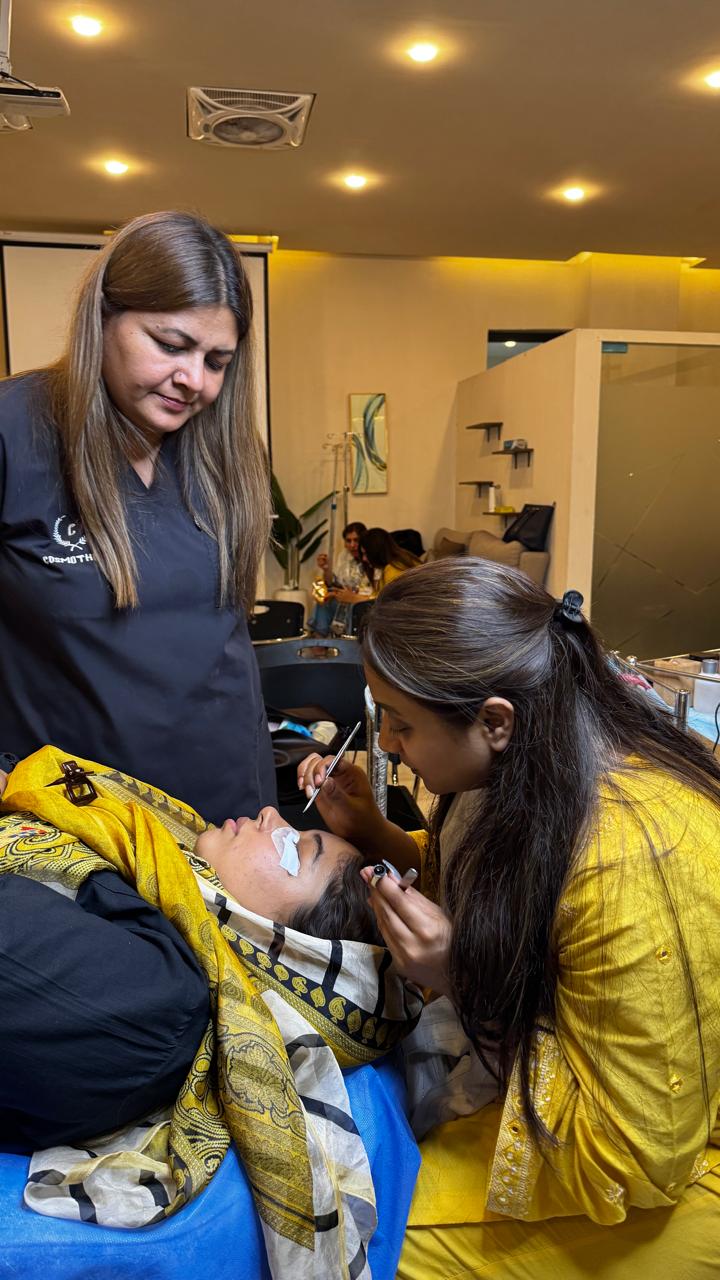
Eyebrows play an important role in facial appearance, which is why professional brow services have become an increasingly popular part of the beauty industry. Microblading eyebrows training in Lahore can help aspiring beauty professionals develop the practical skills needed to understand brow design, facial proportions, pigment selection, hygiene, client consultation and semi-permanent makeup techniques.
Microblading is a detailed skill rather than simply drawing an attractive eyebrow. A professional needs to understand natural brow structure, facial symmetry, skin characteristics, appropriate pigment selection and proper aftercare. Structured education can therefore provide a stronger foundation than relying only on online tutorials.
Cosmetology Edge offers beauty and cosmetology-focused education, with current course content covering areas such as brows, lashes, makeup, nails and hairstyling. Its published microblading material highlights brow mapping, hair-stroke creation, pigment selection, hygiene and client consultation.
If you are searching for a microblading eyebrows training center in Lahore, this guide explains what you should learn, how practical training works, who can consider the course and what to look for before enrolling.
What Is Microblading Eyebrows Training?
Microblading training teaches the fundamentals of creating natural-looking eyebrow designs using a manual cosmetic technique. The training typically combines theoretical knowledge with practical exercises.
Students can learn how to:
- Understand eyebrow structure
- Assess facial proportions
- Map and design eyebrows
- Create hair-like strokes
- Select suitable pigments
- Understand different skin characteristics
- Handle microblading tools correctly
- Follow hygiene and sanitation practices
- Conduct client consultations
- Explain aftercare
- Recognize situations that may require additional professional advice
Microblading requires precision and consistency. Students need sufficient practice to develop control over pressure, stroke direction, spacing and overall brow design.
Why Choose a Microblading Training Center in Lahore?
Lahore has a large and diverse beauty industry, including salons, beauty studios, makeup artists and independent beauty professionals. This makes the city an attractive location for people who want to develop specialized beauty skills.
A dedicated training center can offer a more organized learning environment than trying to learn microblading independently.
1. Structured Learning
A structured course allows students to learn fundamental concepts before moving toward more advanced techniques.
2. Practical Demonstrations
Microblading is a hands-on skill. Watching demonstrations can help students understand how brow mapping, tool handling and stroke creation work in practice.
3. Hygiene Awareness
Because microblading involves working on the skin, sanitation and safe working practices are important parts of professional training.
4. Individual Feedback
Trainer feedback can help students identify issues with brow symmetry, stroke placement, pressure and overall design.
5. Portfolio Development
With appropriate supervised practice, students can gradually build examples of their work that demonstrate their developing skills.
What Do You Learn at a Microblading Eyebrows Training Center?
A good microblading program should cover more than the basic application technique.
1. Introduction to Microblading
Students first learn what microblading is and how it differs from other eyebrow and permanent makeup techniques.
Topics may include:
- Microblading fundamentals
- Basic terminology
- Brow enhancement concepts
- Microblading versus traditional eyebrow makeup
- Microblading versus other semi-permanent brow techniques
- Understanding client expectations
This foundation helps students understand the purpose of each step before beginning practical work.
2. Eyebrow Anatomy and Facial Proportions
Good brow design starts with understanding the individual face.
Training can introduce students to:
- Natural eyebrow structure
- Brow growth patterns
- Facial proportions
- Brow arches
- Brow thickness
- Symmetry and balance
- Different face shapes
- Individual client preferences
The objective is not to create exactly the same eyebrow shape for every person. Instead, the design should be considered in relation to the client’s natural features.
3. Brow Mapping and Designing
Brow mapping is one of the most important skills in microblading.
Students can learn how to:
- Identify the beginning of the brow
- Determine the arch
- Establish the tail
- Compare both sides
- Create balanced outlines
- Adjust the design to facial proportions
- Discuss the proposed shape with the client
Careful mapping can reduce avoidable design mistakes and gives the artist a clear plan before the procedure begins.
4. Skin Types and Skin Assessment
Different skin characteristics can influence how cosmetic pigments behave and how the skin responds.
A training program may introduce:
- Basic skin types
- Skin characteristics
- Oily versus dry skin considerations
- Sensitive skin considerations
- Pigment retention concepts
- Healing considerations
- Situations where treatment may not be appropriate
Students should understand that not every client is automatically suitable for microblading. Proper consultation and appropriate screening are important.
5. Color Theory and Pigment Selection
Pigment selection is another important part of professional brow training.
Students can learn about:
- Basic color theory
- Warm and cool tones
- Pigment selection
- Skin tone considerations
- Natural-looking brow colors
- Color correction concepts
- How healed results can differ from freshly applied pigment
Understanding color helps students make more informed decisions instead of selecting a pigment based only on its appearance in the bottle.
6. Microblading Tools and Equipment
Professional training should also explain the tools used for brow work.
Depending on the program, students may learn about:
- Microblading pens
- Blades
- Measuring tools
- Brow mapping pencils
- Pigment containers
- Practice skins
- Disposable supplies
- Personal protective equipment
- Cleaning and sanitation supplies
Tool handling should be taught alongside hygiene and safe working practices.
7. Hair-Stroke Techniques
Creating realistic-looking strokes requires practice.
Students can learn:
- Basic hair-stroke patterns
- Stroke direction
- Stroke spacing
- Pressure control
- Brow-front strokes
- Arch and tail patterns
- Natural-looking transitions
- Avoiding overly heavy designs
The goal is to understand how individual strokes work together to create a balanced brow.
8. Hygiene and Sanitation
Hygiene should be treated as a core part of microblading training, not an optional topic.
Students should understand:
- Hand hygiene
- Proper workstation preparation
- Disposable supplies
- Protective equipment
- Safe handling of tools
- Cross-contamination prevention
- Proper disposal practices
- Cleaning procedures
- Client and practitioner safety
Anyone considering a microblading course should ask the training center how hygiene and sanitation are taught and demonstrated during practical sessions.
9. Client Consultation
Professional microblading involves communication as well as technical ability.
A consultation can help the practitioner understand:
- The client’s desired brow shape
- Existing brow condition
- Previous cosmetic work
- Skin characteristics
- Expectations
- Lifestyle considerations
- Relevant contraindications
- Aftercare requirements
Students should also learn how to explain realistic outcomes instead of promising identical results for every client.
10. Practical Microblading Training
Theory alone is not enough to master microblading.
Practical training may progress from:
Demonstration → Practice Skin → Guided Exercises → Supervised Model Practice → Skill Refinement
This progression allows students to develop hand control and confidence gradually.
Current Cosmetology Edge material describes practical microblading education around brow mapping, hair-stroke creation, pigment selection, hygiene and client consultation. Its beginner-focused content also emphasizes the importance of hands-on practice for developing precision.
Why Hands-On Practice Matters
Microblading requires fine motor control. A student can understand the theory but still need considerable practice to produce consistent strokes.
Hands-on learning can help students improve:
- Hand stability
- Stroke consistency
- Brow symmetry
- Mapping accuracy
- Pigment handling
- Tool control
- Client communication
- Confidence
When comparing a microblading eyebrows training center in Lahore, ask whether practical training is included and what type of supervised practice is available.
Who Can Learn Microblading?
Microblading training may be suitable for people interested in developing professional beauty skills, including:
Beginners
People with little or no previous beauty experience can look for beginner-friendly programs that start with fundamentals.
Makeup Artists
Makeup artists can explore brow artistry as an additional beauty skill.
Beauticians
Beauticians may add brow-related services to their existing skill set, subject to appropriate training and local requirements.
Salon Professionals
Existing salon workers can use specialized training to expand their knowledge.
Beauty Entrepreneurs
People planning to develop a beauty business may consider microblading as one skill within a broader service portfolio.
However, eligibility, course content and scope of practice can vary. Always confirm the current admission requirements directly with the training provider.
Benefits of Learning Microblading
A structured microblading course can provide several professional-development benefits.
Develop a Specialized Beauty Skill
Microblading is a specialized brow technique that requires precision and practice.
Expand Your Existing Services
For makeup artists and beauticians, brow artistry can complement other services such as makeup, lash work and brow styling.
Build a Professional Portfolio
Consistent practice can help students document their progress and create a portfolio of suitable work.
Improve Client Consultation Skills
Training can teach students how to discuss brow shape, expectations, aftercare and suitability professionally.
Develop Confidence Through Practice
Supervised practical work can help learners identify mistakes and improve technique before working independently.
Why Consider Cosmetology Edge for Microblading Training?
Cosmetology Edge presents itself as a cosmetology and beauty education academy offering training across makeup, nails, lashes, brows and hairstyling. Its published microblading material specifically focuses on professional brow skills such as mapping, hair strokes, pigment selection, hygiene and client consultation.
For someone comparing training options, useful factors to evaluate include:
- Practical training opportunities
- Brow mapping education
- Pigment theory
- Hygiene and sanitation
- Client consultation
- Trainer experience
- Practice opportunities
- Current curriculum
- Class schedule
- Course fees
- Admission requirements
- Certificate details, if offered
The exact current curriculum, schedule, fees and certification terms should be confirmed with the academy before enrollment.
How to Choose the Right Microblading Training Center in Lahore
Choosing a training center should involve more than looking at the course title.
Check the Curriculum
Make sure the curriculum includes the fundamentals you actually want to learn.
Ask About Practical Training
Microblading is a practical skill, so find out how much supervised practice is included.
Review Hygiene Procedures
Ask how tools, disposable materials and workstations are handled during training.
Understand the Certificate
If a certificate is offered, ask exactly what it represents and who issues it. Avoid assuming that a private course certificate automatically provides a government license or authorization to perform regulated procedures.
Ask About Current Fees and Duration
Course schedules can change. Confirm the latest duration, fee and class timetable directly with the academy.
Look at Student Work
Where appropriate, reviewing genuine student portfolios can help you understand the level of practical training.
Microblading Course vs Learning Online
Online videos can be useful for introducing concepts, but they cannot always replace supervised practical training.
Online Learning
- Convenient
- Useful for theory
- Easy to revisit
- Limited hands-on feedback
- No direct trainer correction
Training Center
- Structured curriculum
- Demonstrations
- Practical exercises
- Trainer feedback
- Opportunity to ask questions
- Better environment for developing hands-on skills
For a precision-based skill such as microblading, practical feedback can be particularly valuable.
Microblading and Professional Safety
Microblading involves working on the skin, so proper hygiene, client screening and aftercare education are essential.
A professional learner should understand that:
- Every client may respond differently.
- Skin characteristics can affect results.
- Pigment retention varies.
- Healing takes time.
- Some clients may not be suitable.
- Proper sanitation is essential.
- Results should never be guaranteed.
- Local rules and professional requirements should be followed.
Training is an important foundation, but completing a course does not automatically mean that a person is licensed or legally authorized to perform every cosmetic procedure. Learners should check applicable local requirements before offering services professionally.
Career Opportunities After Microblading Training
Microblading can become one component of a broader beauty career.
Depending on qualifications, skills and local requirements, learners may explore opportunities such as:
- Brow artist
- Makeup artist with brow specialization
- Beauty salon professional
- Permanent makeup trainee
- Freelance beauty professional
- Beauty studio entrepreneur
- Brow styling specialist
- Beauty educator after gaining sufficient professional experience
Microblading can also complement skills in makeup, lashes, nails, hairstyling and other beauty services.
How to Improve After Completing Training
Completing a course is only the beginning of skill development.
Continue improving by:
- Practicing regularly.
- Reviewing your brow mapping.
- Studying facial proportions.
- Improving stroke consistency.
- Learning more about pigments.
- Following hygiene procedures carefully.
- Keeping a portfolio of appropriate work.
- Asking experienced professionals for feedback.
- Keeping up with evolving beauty techniques.
- Following applicable local requirements.
Consistent practice is particularly important because microblading requires controlled and precise hand movements.
Frequently Asked Questions
1. What is a microblading eyebrows training center in Lahore?
A microblading eyebrows training center provides structured education in brow mapping, hair-stroke techniques, pigment selection, tool handling, hygiene, consultation and aftercare.
2. Can beginners learn microblading?
Yes, beginners can look for introductory microblading programs that teach the fundamentals before progressing to practical work. Current Cosmetology Edge content describes beginner-oriented microblading education covering brow structure, mapping, pigments, hygiene and practical skills.
3. What do I learn in a microblading course?
Training may cover brow anatomy, facial proportions, brow mapping, skin assessment, color theory, pigment selection, tool handling, hair strokes, hygiene, consultation, aftercare and practical application.
4. Is practical training important for microblading?
Yes. Microblading requires precision and hand control, so supervised practical exercises can help learners develop consistency and identify technical mistakes.
5. Do I need previous beauty experience?
Not necessarily. Some programs are designed for beginners, while others may be more suitable for experienced beauty professionals. Check the current admission requirements before enrolling.
6. Does microblading training include brow mapping?
Brow mapping is a fundamental part of professional microblading education and may include facial measurements, symmetry, brow proportions and customized design.
7. Will I learn pigment selection?
A comprehensive program can introduce color theory and pigment selection according to skin characteristics and the desired brow result.
8. Is hygiene included in microblading training?
Professional training should include hygiene, sanitation, safe tool handling, disposable materials and cross-contamination prevention.
9. Can microblading training help makeup artists?
Yes. Microblading can complement existing makeup and brow-related skills, although practitioners should follow applicable qualifications and local requirements.
10. Can I start a business after learning microblading?
Training can help develop a specialized beauty skill, but starting a business also requires consideration of local regulations, hygiene requirements, equipment, consultation practices, marketing and business management.
11. Does completing a microblading course automatically make me licensed?
No. A private training certificate does not automatically provide every license, registration or legal authorization that may apply to cosmetic services. Check the requirements applicable to your location and type of service.
12. How do I choose a microblading training center in Lahore?
Compare the curriculum, practical training, trainer experience, hygiene standards, course duration, fees, admission requirements, certificate details and opportunities for supervised practice.
13. Does Cosmetology Edge offer microblading training?
Cosmetology Edge currently publishes microblading-focused training content covering brow mapping, hair-stroke creation, pigment selection, hygiene and client consultation. Confirm the latest course schedule and enrollment details directly with the academy.
14. Why should I learn microblading professionally instead of only watching online videos?
Professional training can provide structured learning, demonstrations, practical exercises and trainer feedback. These can be valuable for a precision-based skill such as microblading.
Conclusion
Choosing the right microblading eyebrows training center in Lahore can help you build a stronger foundation in brow artistry and professional beauty practice. Microblading requires more than learning how to create hair strokes. Students should understand brow mapping, facial proportions, skin characteristics, pigments, tool handling, hygiene, consultation and aftercare.
Cosmetology Edge provides cosmetology-focused education and publishes microblading training content covering these important areas. Before enrolling, confirm the current curriculum, practical training, schedule, fees, admission requirements and certificate terms directly with the academy.
With proper education, regular practice and responsible professional standards, microblading can become a valuable addition to a broader beauty skill set.