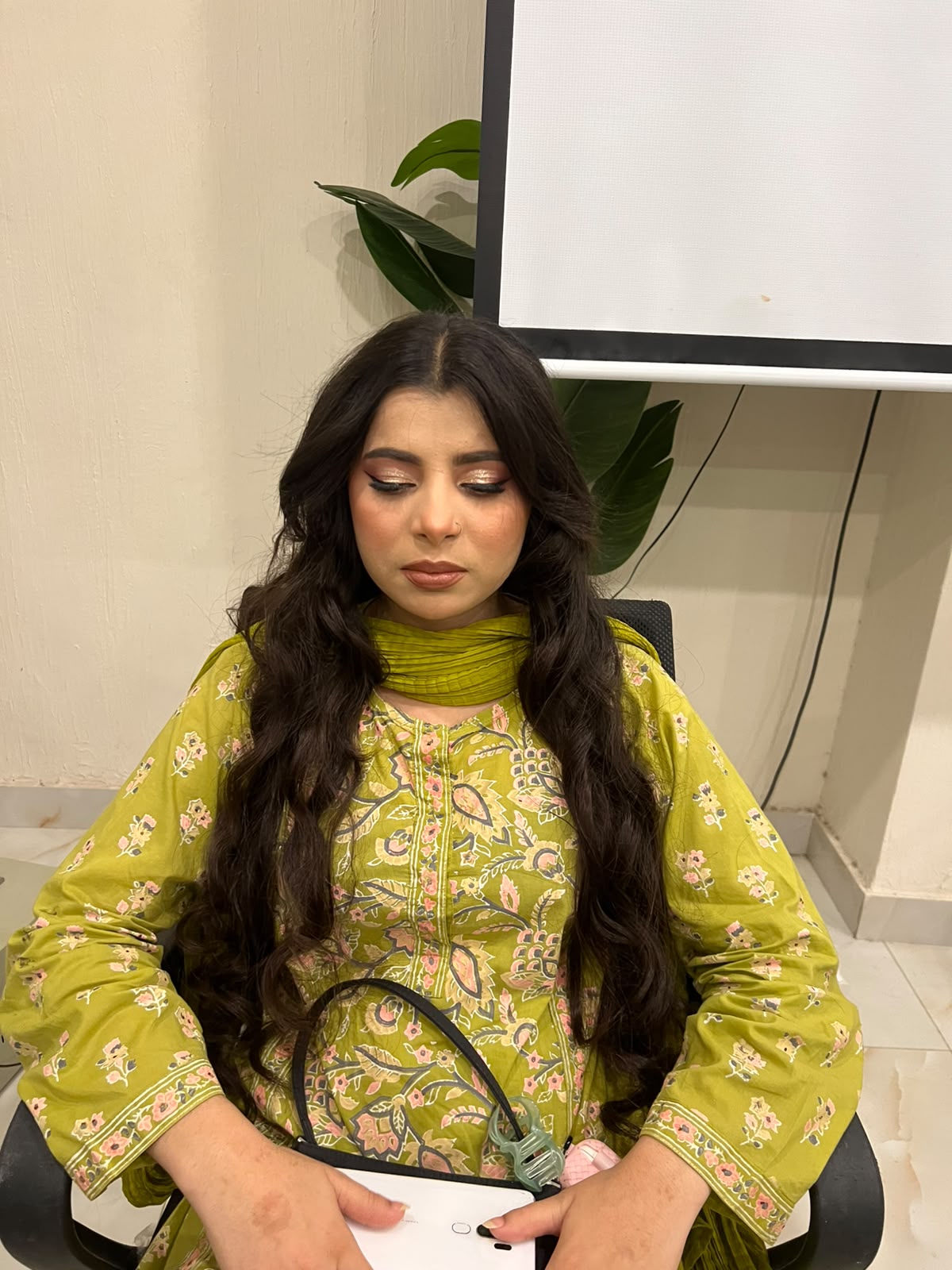
If you are looking for a hair extension course in Lahore, learning from a practical beauty training institute can help you develop valuable hairstyling skills. Hair extensions are popular for adding length, volume, texture, and styling options without waiting for natural hair to grow.
At Cosmetology Edge, students can learn the fundamentals of professional hair extensions, including hair preparation, extension selection, application techniques, blending, maintenance, removal, and client consultation. The goal of proper training is not simply to attach extensions but to understand how different techniques and hair types affect the final result.
Whether you are a beginner, beauty professional, hairstylist, or someone planning to start a salon business, structured hair extension training can give you a stronger foundation for working with clients.
What Is a Hair Extension Course?
A hair extension course teaches the practical and theoretical skills needed to work with different types of hair extensions.
Depending on the course syllabus, students may learn about:
- Hair extension types
- Natural and synthetic extension hair
- Hair preparation
- Sectioning and application
- Blending techniques
- Matching color and texture
- Extension maintenance
- Safe removal
- Client consultation
- Hair and scalp considerations
- Hygiene and tool care
- Aftercare instructions
- Professional hairstyling
A good course should combine theory with hands-on practice. This allows students to understand not only how to apply hair extensions, but also how to create a neat, balanced, and professional-looking result.
Why Learn Hair Extensions in Lahore?
Lahore has a growing beauty and salon industry, creating opportunities for people with practical hairstyling skills. Hair extensions are commonly used for bridal styling, party looks, photography, fashion shoots, salon services, and everyday transformations.
Choosing a hair extension course in Lahore can also be convenient for students who want to build their skills locally.
With proper training, you can learn how to:
- Work with different hair textures
- Choose suitable extension methods
- Create natural-looking blends
- Understand extension placement
- Provide basic maintenance guidance
- Build professional hairstyling confidence
Most importantly, training can help you develop a service that you can potentially add to an existing beauty or hairstyling business.
What Will You Learn in a Hair Extension Course?
A comprehensive hair extension course should cover several important areas.
1. Introduction to Hair Extensions
Students first learn what hair extensions are and how they differ from traditional hairstyling techniques.
You may study different extension options and understand their general advantages, limitations, application requirements, and maintenance needs.
This foundation helps beginners choose the right technique for different styling situations.
2. Types of Hair Extensions
Hair extensions are available in different forms and application methods.
Depending on the syllabus, training may introduce students to:
- Clip-in extensions
- Tape-in extensions
- Weft extensions
- Keratin or fusion extensions
- Micro or bead-based extensions
- Other salon extension techniques
Each method has different application and maintenance requirements. Therefore, understanding the differences is an important part of professional training.
3. Hair Preparation
Proper preparation can make a major difference in the final result.
Students can learn how to prepare the client’s hair before extension application, including appropriate sectioning, detangling, and product considerations.
Training should also explain why the condition of the natural hair matters before selecting an extension technique.
4. Hair Sectioning
Clean sectioning is an important hairstyling skill.
Students learn how to create organized sections and place extensions according to the desired hairstyle and distribution of volume.
Poor sectioning can make extensions look uneven or uncomfortable, so practicing this skill is essential.
5. Color Matching
Choosing a suitable extension color is another important part of the course.
Students may learn how to compare the client’s natural hair with extension shades and create a more seamless appearance.
Color matching becomes particularly important when clients have highlights, balayage, ombré, or multiple tones in their hair.
6. Application Techniques
Practical application is usually one of the most important parts of hair extension training.
Students can practice different techniques according to the course curriculum. The emphasis should remain on controlled application, appropriate placement, clean sections, and professional finishing.
Hands-on practice can help beginners become more comfortable with extension tools and techniques.
7. Blending and Styling
Simply applying extensions is not enough. The extensions should also blend appropriately with the client’s natural hair.
Students can learn:
- Basic blending
- Layering considerations
- Curling and straightening around extensions
- Creating volume
- Basic styling
- Finishing techniques
These skills can help create a more cohesive final hairstyle.
Hair Extension Maintenance Training
Maintenance is an important part of providing a professional service.
Clients need to understand how to care for their extensions after application. A hair extension course can teach students how to explain basic maintenance requirements clearly.
Training may include:
- Brushing techniques
- Washing considerations
- Drying
- Sleeping with extensions
- Product selection
- Regular maintenance appointments
- Avoiding excessive tension
- Safe removal procedures
Good aftercare guidance can help clients maintain their hairstyle while reducing avoidable problems.
Hair Extension Removal
Professional removal is just as important as application.
Students should learn how the specific extension method is removed and why extensions should not be pulled or removed carelessly.
Incorrect removal can cause unnecessary pulling or breakage. Therefore, supervised practical training is particularly valuable for beginners.
Hygiene and Client Safety
Professional beauty training should always include hygiene.
Students can learn about:
- Clean tools and workstations
- Hand hygiene
- Proper tool handling
- Safe product use
- Client preparation
- Appropriate disposal practices
- Basic infection-prevention principles
Students should also understand when a particular service may not be appropriate and when a client should be referred to a qualified healthcare professional for a scalp or hair concern.
Hair and Scalp Assessment
Not every hair type is suitable for every extension technique.
A basic assessment can help a stylist understand factors such as:
- Hair thickness
- Hair texture
- Existing damage
- Hair length
- Scalp comfort
- Previous chemical treatments
- Desired hairstyle
This does not replace professional medical assessment. However, understanding basic hair and scalp considerations can help a stylist choose services more responsibly.
Who Should Join a Hair Extension Course?
A hair extension course can be suitable for different learners.
Beginners
If you are new to hairstyling, structured training can give you a starting point for developing practical skills.
Existing Hairstylists
Professional hairstylists can add extension services to their existing skill set.
Beauticians
Beauticians who already offer salon services may use hair extension training to expand their service range.
Salon Professionals
Salon workers can learn additional techniques that may complement hair cutting, coloring, and styling services.
Aspiring Beauty Entrepreneurs
If you plan to establish a salon or freelance beauty business, hair extension skills can become part of your service portfolio.
Benefits of Taking Hair Extension Training
Learning hair extensions through a structured course can provide several benefits.
Develop Practical Skills
Hands-on practice gives students an opportunity to work through techniques instead of relying only on theoretical information.
Expand Your Beauty Skill Set
Hair extensions can complement other services such as hair styling, bridal makeup, haircuts, and event hairstyling.
Improve Client Consultation Skills
Students can learn how to discuss desired length, volume, color, maintenance, and expectations with clients.
Build a Professional Portfolio
As your practical skills improve, you can create a portfolio of genuine student or client work, where appropriate permissions have been obtained.
Explore Freelance Opportunities
Hair extension skills can potentially be used in salons, beauty studios, freelance hairstyling, bridal services, or personal beauty businesses.
Actual income and career opportunities depend on your skills, experience, business model, location, and client demand.
Hair Extension Course vs Self-Learning
Many beginners try to learn hair extensions from online videos. Online resources can certainly provide useful information, but they may not replace supervised practical training.
A structured course can provide:
- Organized lessons
- Demonstrations
- Practical exercises
- Instructor feedback
- Opportunity to correct technique
- Guidance on tools and products
- Client consultation practice
For beginners, feedback can be particularly valuable because small mistakes in sectioning, placement, or removal may affect the final result.
How to Choose the Best Hair Extension Course in Lahore
When comparing hair extension courses, look beyond the course title.
Consider the following factors:
Practical Training
Ask how much hands-on practice the course includes.
Course Syllabus
Check whether the syllabus covers application, blending, maintenance, removal, hygiene, and client consultation.
Instructor Experience
Look for trainers who have relevant practical salon or beauty-industry experience.
Training Environment
A clean, organized, practical learning environment can make training more effective.
Tools and Equipment
Ask whether students practice with appropriate tools and extension materials.
Course Duration
Choose a duration that gives you enough time to understand and practice the techniques.
Certification
If the institute provides a certificate, ask exactly what qualification it represents and whether it is internally issued or externally recognized.
Avoid choosing a course solely because it advertises itself as the “best” option. Look at the actual curriculum, practical training, trainer experience, student work, and course terms.
Why Choose Cosmetology Edge for Hair Extension Training?
Cosmetology Edge focuses on beauty and cosmetology education for learners who want practical skills they can develop into professional services.
For students interested in hair extensions, a useful training approach should combine technical instruction with practical application.
Students can focus on areas such as:
- Hair extension fundamentals
- Hair preparation
- Sectioning
- Extension application
- Color and texture matching
- Blending
- Styling
- Maintenance
- Removal
- Hygiene
- Client consultation
Before enrolling, students should confirm the current course duration, fee, syllabus, practical hours, available extension methods, certificate details, class schedule, and trainer information directly with Cosmetology Edge.
Career Opportunities After Hair Extension Training
After developing sufficient skills and experience, learners may explore different career paths.
Salon Hairstylist
You can work toward providing hair extension services as part of a salon role.
Freelance Hair Extension Specialist
Some beauty professionals offer services independently after developing the necessary skills and client base.
Bridal Hairstyling
Extensions can be useful for creating volume and length for bridal hairstyles.
Event Hairstyling
Party and event clients may also request temporary or semi-permanent extension services.
Beauty Business Owner
Hair extensions can potentially become one service within a broader salon or beauty business.
However, completing a course does not automatically guarantee employment, income, or business success. Continued practice and client experience remain important.
How to Build a Career in Hair Extensions
A simple progression can look like this:
Step 1: Learn the fundamentals
Step 2: Practice under supervision
Step 3: Improve sectioning and application
Step 4: Learn blending and styling
Step 5: Practice consultation and aftercare
Step 6: Build a genuine portfolio
Step 7: Gain salon or freelance experience
Step 8: Continue learning advanced techniques
As your skills develop, you can gradually expand the range of extension methods you offer.
Is a Hair Extension Course Worth It?
A hair extension course in Lahore can be worthwhile if you want to develop a practical hairstyling skill and potentially add extension services to your professional portfolio.
The value of the course depends on the quality of training, amount of practical work, instructor support, course syllabus, and how consistently you practice afterward.
For beginners, structured education can provide a clearer starting point than trying to learn every technique independently.
Start Your Hair Extension Training in Lahore
If you want to develop professional hairstyling skills, learning hair extensions can be a useful addition to your beauty education.
A good training program should teach more than application. It should help you understand hair preparation, sectioning, extension selection, blending, maintenance, removal, hygiene, and client care.
If you are searching for a hair extension course in Lahore, consider Cosmetology Edge as an option and confirm the latest course details before enrollment.
Frequently Asked Questions
1. What is a hair extension course in Lahore?
A hair extension course teaches students how to prepare hair, select extensions, apply different techniques, blend extensions, provide maintenance guidance, and safely remove extensions according to the course curriculum.
2. Can beginners join a hair extension course?
Yes. Many hair extension programs can be designed for beginners, although eligibility requirements vary by institute.
3. What types of hair extensions can I learn?
The techniques depend on the course syllabus. Training may cover clip-ins, tape-ins, wefts, keratin/fusion methods, or bead-based extensions.
4. Is practical training important for hair extensions?
Yes. Practical training allows students to practice sectioning, placement, application, blending, and removal under guidance.
5. How long does a hair extension course take?
Course duration varies by institute and syllabus. Confirm the current duration and practical hours with Cosmetology Edge before enrollment.
6. Will I receive a certificate after completing the course?
This depends on the specific program. Students should confirm whether a certificate is provided and what it represents before enrolling.
7. Can I work in a salon after learning hair extensions?
Hair extension training can help develop relevant skills for salon work, but employment depends on your overall qualifications, practical ability, experience, and the salon’s requirements.
8. Can I offer hair extension services as a freelancer?
You may be able to offer hair extension services independently, subject to your skills, business requirements, and applicable local rules.
9. Do hair extensions damage natural hair?
Hair extensions do not affect every person in the same way. Incorrect application, excessive weight, poor maintenance, or excessive tension can contribute to hair breakage or discomfort. Proper technique and suitable extension selection are important.
10. Do I need previous hairstyling experience?
Not necessarily. Beginners can look for introductory programs, while experienced hairstylists may choose more advanced training.
11. What should I learn before applying hair extensions?
Basic hair preparation, sectioning, hair assessment, extension selection, application, blending, maintenance, and safe removal are useful foundational skills.
12. Can hair extension training help me start a beauty business?
It can help you develop a specific service skill. However, building a successful business also requires client management, pricing, marketing, hygiene, customer service, and business planning.
13. How do I choose a hair extension course in Lahore?
Compare the curriculum, practical training, trainer experience, course duration, tools, training environment, certificate details, fees, and student work before enrolling.
14. Why choose Cosmetology Edge for hair extension training?
Cosmetology Edge can be considered by learners looking for beauty and cosmetology training. Confirm the current hair extension syllabus, practical sessions, trainers, duration, fees, and certificate details directly with the institute.