Makeup artistry has become a serious professional skill in Lahore. From bridal makeup and party looks to fashion shoots, photography, media and freelance beauty services, skilled makeup artists can work across many areas of the beauty industry.
However, becoming a professional makeup artist involves much more than learning how to apply foundation or eyeshadow. A good training program should teach students about skin preparation, color theory, face shapes, product selection, blending, eye makeup, contouring, highlighting, hygiene and client consultation.
If you are searching for the best makeup artist school in Lahore, it is important to compare schools based on their curriculum, practical training, instructors, learning environment and the skills you can actually develop.
Cosmetology Edge is a beauty and cosmetology training center in Lahore offering makeup-focused education alongside courses in other areas of beauty. Its current website describes makeup training covering foundational techniques, product knowledge and practical learning, while its published makeup artist course information includes areas such as skin preparation, color correction, contouring, blending, bridal makeup and client consultation.
The goal of this guide is not simply to call one institute “the best.” Instead, it explains what makes a makeup artist school worth considering and how Cosmetology Edge can fit into that decision.
What Is a Makeup Artist School?
A makeup artist school provides structured education for people who want to develop professional makeup skills.
Unlike casual makeup tutorials, a structured course can teach techniques in a logical sequence. Students can learn basic principles first and then progress toward more advanced applications.
A professional makeup program may include:
- Skin preparation
- Skin types and undertones
- Foundation matching
- Color correction
- Concealer application
- Face shaping
- Contouring and highlighting
- Eye makeup
- Eyeliner techniques
- Eyeshadow blending
- Lip makeup
- Bridal makeup
- Party and evening makeup
- Product knowledge
- Brush and tool handling
- Hygiene and sanitation
- Client consultation
- Practical application
Cosmetology Edge’s published makeup course content similarly emphasizes theory, product knowledge and hands-on practice for aspiring makeup artists.
What Makes the Best Makeup Artist School in Lahore?
The word “best” can mean different things to different students. Someone starting from zero may need a beginner-friendly program, while an experienced beautician may want advanced bridal or editorial techniques.
Before choosing a school, consider these important factors.
1. Comprehensive Curriculum
A good makeup course should cover more than one type of makeup.
Look for a curriculum that develops skills across:
- Basic makeup
- Day makeup
- Evening makeup
- Party makeup
- Bridal makeup
- Glam makeup
- Photography makeup
- Color correction
- Contouring
- Highlighting
- Eye makeup
A broad curriculum gives students opportunities to discover which area of makeup artistry suits their interests.
2. Practical Training
Makeup is a hands-on profession.
Reading about blending or watching someone demonstrate foundation application is different from actually performing the technique.
Practical sessions can help students improve:
- Brush control
- Foundation blending
- Color correction
- Eyeshadow placement
- Eyeliner precision
- Contouring
- Highlighting
- Lash application
- Overall finishing
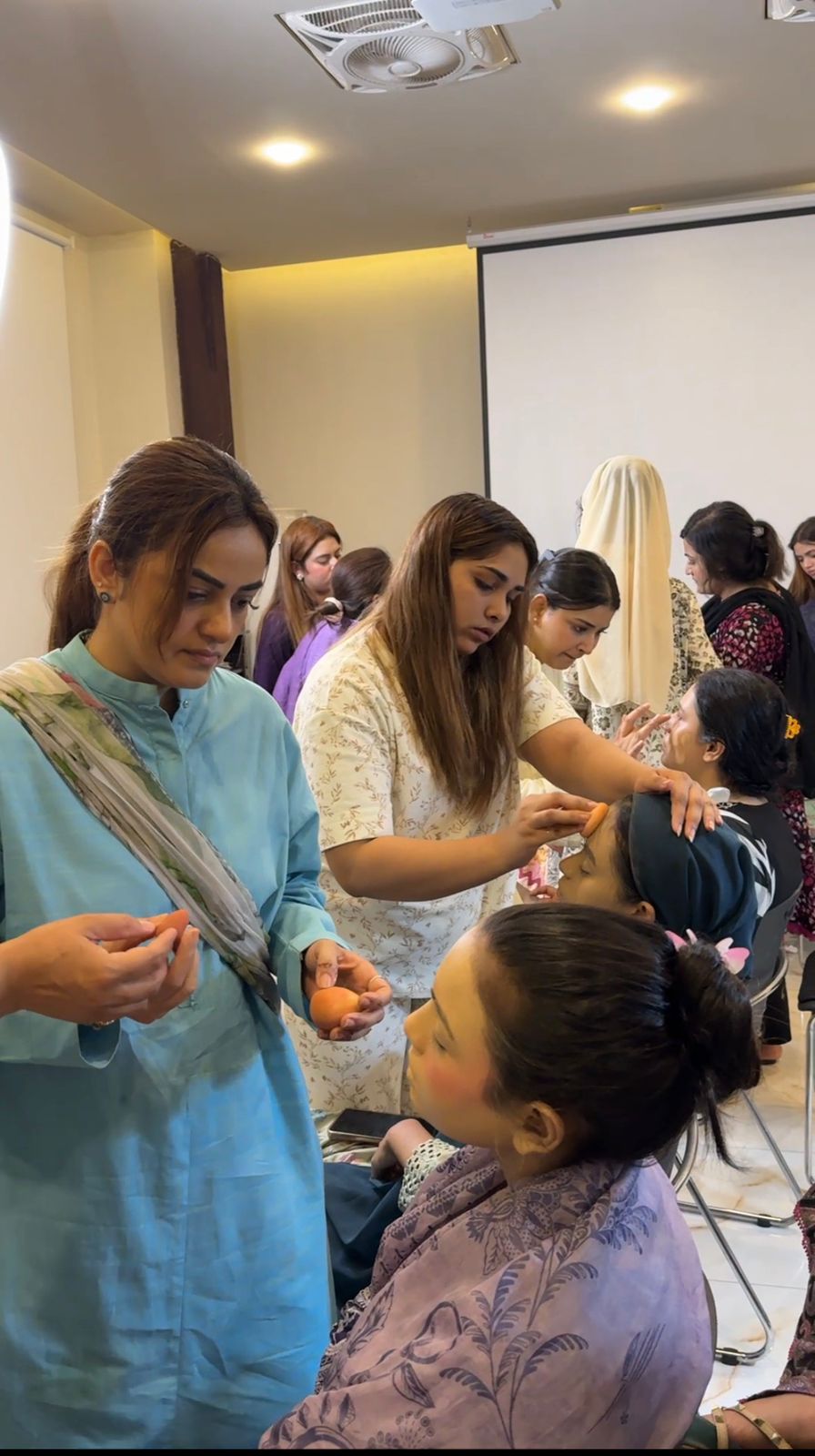
Cosmetology Edge’s makeup training material emphasizes hands-on practice and practical exposure rather than theory alone.
3. Experienced Trainers
The instructor can have a major influence on the learning experience.
When comparing makeup schools, consider whether instructors can explain:
- Why a particular product is used
- How to select shades
- How skin preparation affects makeup
- How to adapt makeup to different face shapes
- How lighting changes the appearance of makeup
- How to correct common mistakes
- How to work efficiently with clients
A good instructor should not simply demonstrate a look. They should explain the reasoning behind each step.
4. Skin Preparation
Professional makeup starts before foundation.
Students should understand the importance of preparing the skin according to its condition and makeup requirements.
Training can cover:
- Cleansing
- Moisturizing
- Primer selection
- Skin type considerations
- Hydration
- Texture management
- Makeup longevity
- Basic product compatibility
Proper preparation can help create a smoother makeup application and improve the overall finish.
5. Color Theory
Color theory is one of the foundations of professional makeup artistry.
Students can learn how colors interact and how different shades can be used to enhance or balance facial features.
Important concepts may include:
- Warm undertones
- Cool undertones
- Neutral undertones
- Complementary colors
- Color correction
- Foundation matching
- Blush selection
- Lip color selection
- Eyeshadow combinations
Understanding color theory helps makeup artists make decisions based on the individual client rather than simply copying a trend.
6. Foundation and Base Makeup
A professional makeup artist needs to understand how to create an appropriate base.
Training can include:
- Foundation selection
- Shade matching
- Undertone identification
- Coverage levels
- Application techniques
- Blending
- Concealer
- Setting products
- Powder placement
Students should also learn that one foundation shade does not necessarily work for every client.
Different skin tones, undertones, textures and desired finishes require different approaches.
7. Contouring and Highlighting
Contouring and highlighting can change how facial features appear under different lighting conditions.
Students can learn how to work with:
- Cheekbones
- Jawline
- Nose
- Forehead
- Chin
- Under-eye area
The goal should be controlled enhancement rather than applying the same contouring pattern to every face.
8. Professional Eye Makeup
Eye makeup is one of the most creative parts of makeup artistry.
A comprehensive course may introduce:
- Basic eyeshadow application
- Transition shades
- Blending
- Cut-crease concepts
- Smokey eyes
- Shimmer application
- Eyeliner
- Kajal
- False lashes
- Brow enhancement
Students can gradually progress from simple looks to more detailed applications.
9. Bridal Makeup Training
Bridal makeup is a major area of interest for many aspiring makeup artists in Lahore.
A bridal-focused curriculum may cover:
- Long-wear preparation
- Bridal base
- Eye makeup
- Contouring
- Highlighting
- Lip preparation
- False lashes
- Traditional bridal looks
- Modern bridal looks
- Photography considerations
- Client consultation
Bridal work also requires good time management because makeup artists often need to prepare clients according to a fixed event schedule.
10. Makeup for Photography and Events
Makeup can look different under natural light, studio lighting and camera conditions.
Students can benefit from understanding:
- Flash photography
- Lighting
- Camera-ready base makeup
- HD-style makeup concepts
- Shine control
- Highlight placement
- Long-event makeup
This knowledge can be useful for artists who want to work at weddings, shoots, events or media-related projects.
11. Hygiene and Sanitation
Professional makeup artistry requires responsible hygiene practices.
Students should learn:
- Hand hygiene
- Brush cleaning
- Product hygiene
- Disposable applicators
- Safe product handling
- Workstation cleanliness
- Cross-contamination prevention
- Proper client preparation
These practices protect both the artist and the client and should be treated as an essential part of professional education.
Makeup Artist School in Lahore for Beginners
You do not necessarily need to be an experienced makeup artist before beginning professional training.
A beginner-focused course can start with the basics.
Beginners may learn:
- Makeup tools and brushes
- Skin preparation
- Foundation
- Concealer
- Color correction
- Basic eye makeup
- Blush
- Contouring
- Highlighting
- Lip application
- Basic bridal techniques
- Hygiene
Once these fundamentals are understood, students can move toward more advanced techniques.
Cosmetology Edge currently publishes makeup training content aimed at both beginners and learners with existing beauty experience.
Makeup Training for Existing Beauticians
A makeup course is not only for complete beginners.
Existing beauticians may want additional training to improve:
- Bridal makeup
- Glam makeup
- Eye makeup
- Color correction
- Foundation matching
- Product selection
- Client consultation
- Photography makeup
Adding specialized makeup skills can complement other salon services.
Why Hands-On Makeup Practice Matters
One of the most important questions to ask when choosing a makeup school is:
How much practical training will I receive?
Makeup requires muscle memory and visual judgment. Students need to practice techniques repeatedly to understand how different products and tools behave.
Hands-on practice can help improve:
- Blending speed
- Brush control
- Product application
- Symmetry
- Color matching
- Eye makeup precision
- Base finishing
- Client communication
Cosmetology Edge’s current makeup course pages emphasize practical learning and supervised experience.
What Makeup Tools Should Students Learn?
Professional makeup education should also explain how to select and use different tools.
These may include:
- Foundation brushes
- Concealer brushes
- Powder brushes
- Blending brushes
- Angled brushes
- Flat eyeshadow brushes
- Beauty sponges
- Eyelash tools
- Brow tools
- Mixing palettes
- Disposable applicators
Students should also understand when different tools are appropriate for different products and techniques.
Product Knowledge for Makeup Artists
A makeup artist does not need to use every product available in the market.
Instead, students should learn how to evaluate products based on:
- Skin type
- Skin tone
- Undertone
- Coverage
- Finish
- Longevity
- Event type
- Lighting
- Client preferences
Product knowledge can help artists create more consistent results while avoiding unnecessary product use.
Client Consultation Skills
Professional makeup is a service business, so communication matters.
Before beginning makeup, an artist may need to discuss:
- Desired look
- Event type
- Outfit
- Jewelry
- Skin concerns
- Preferred makeup style
- Allergies or sensitivities where relevant
- Expected finish
- Timing
- Photography requirements
Good consultation helps establish realistic expectations and makes the service more personalized.
Why Lahore Is a Good Place to Learn Makeup Artistry
Lahore has an active beauty, fashion and wedding industry. Makeup services are used for:
- Weddings
- Engagements
- Parties
- Fashion shoots
- Photography
- Events
- Social media content
- Salon services
- Personal styling
This environment makes professional makeup education relevant for people who want to develop beauty-industry skills.
However, demand alone does not guarantee a successful career. Students still need technical ability, professionalism, communication skills, portfolio development and consistent practice.
Why Consider Cosmetology Edge?
Cosmetology Edge is a beauty and cosmetology training center in Lahore. Its current website presents courses and educational content covering makeup, hairstyling, nails, lashes, brows and broader cosmetology skills.
Its published makeup artist course information highlights:
- Foundation makeup
- Skin preparation
- Color correction
- Contouring
- Blending
- Bridal makeup
- HD makeup
- Product knowledge
- Client consultation
- Practical learning
The academy’s current homepage also features a 1 Month Advance Makeup Course, alongside other beauty courses. Before publishing a specific duration, fee or certification claim on your page, verify that the information is still current for the exact intake.
How to Choose the Best Makeup Artist School in Lahore
If several academies are available, compare them using the following checklist.
Curriculum
Does the course cover the techniques you want to learn?
Practical Training
Will you actually practice, or is the course primarily demonstration-based?
Trainers
Can the instructors explain techniques clearly and provide individual feedback?
Hygiene
Are professional sanitation procedures included?
Class Environment
Is there enough opportunity to practice?
Course Schedule
Does the timetable fit your availability?
Fees
Compare the complete course fee and find out what equipment or products are included.
Certification
Ask exactly what certificate is issued, by whom, and what it represents. Do not assume that a private course certificate is equivalent to a government qualification.
Portfolio
Find out whether students have opportunities to develop suitable portfolio work.
Career Support
If career guidance is advertised, ask what it actually includes.
Career Opportunities After Makeup Artist Training
Professional makeup skills can support several career paths, depending on your experience and business development.
Possible options include:
- Bridal makeup artist
- Party makeup artist
- Freelance makeup artist
- Salon makeup artist
- Fashion makeup assistant
- Photography makeup artist
- Beauty studio owner
- Makeup educator after gaining appropriate experience
- Social media beauty creator
- Makeup consultant
Success in these areas depends on skill, experience, portfolio quality, professionalism, networking and business development. A course itself cannot guarantee employment or income.
Building a Makeup Artist Portfolio
A portfolio is one of the most useful tools for a developing makeup artist.
A good portfolio can demonstrate:
- Clean base makeup
- Bridal looks
- Eye makeup
- Soft glam
- Traditional looks
- Modern looks
- Different skin tones
- Different face shapes
- Before-and-after work where appropriate
Always obtain appropriate permission before photographing or publishing a client’s image.
Makeup Artist School vs Online Tutorials
Online tutorials can be useful for inspiration and revision, but structured training offers a different learning experience.
Online Tutorials
- Flexible
- Convenient
- Often inexpensive or free
- Useful for inspiration
- Limited personalized feedback
Professional Training
- Structured curriculum
- Demonstrations
- Hands-on practice
- Trainer feedback
- Opportunity to ask questions
- More organized progression
For beginners, structured practical training can provide a useful foundation.
Frequently Asked Questions
1. What is the best makeup artist school in Lahore?
The right school depends on your goals, budget, preferred course structure and desired specialization. Compare curriculum, practical training, trainers, hygiene, course schedule and certification before deciding.
2. Can beginners join a makeup artist course?
Yes. Beginner-friendly makeup courses can introduce students to skin preparation, foundation, color theory, blending, eye makeup and other fundamentals.
3. What is taught in a professional makeup artist course?
A professional course may cover skin preparation, foundation, color correction, contouring, highlighting, eye makeup, bridal makeup, product knowledge, hygiene and client consultation.
4. Is practical training important for makeup artists?
Yes. Makeup is a hands-on skill, so repeated practice and trainer feedback can help students develop technique and consistency.
5. Can I learn bridal makeup at a makeup school in Lahore?
Many professional makeup programs include bridal techniques. Confirm the current curriculum to ensure bridal makeup is included in the specific course you are considering.
6. Do makeup courses teach color theory?
A comprehensive makeup course should introduce color theory, undertones, shade selection and color correction.
7. Can I join a makeup course without previous experience?
Many programs accept beginners. However, admission requirements vary, so check the current requirements with the academy before enrolling.
8. Can a makeup course help me become a freelance makeup artist?
A course can help you develop technical skills, but freelancing also requires portfolio development, client communication, pricing, marketing, scheduling and business skills.
9. Does Cosmetology Edge offer makeup artist training in Lahore?
Yes. Cosmetology Edge currently publishes makeup artist training information covering foundational and advanced makeup skills, practical learning and areas such as bridal makeup and client consultation.
10. Does Cosmetology Edge offer an advanced makeup course?
Its current website features a 1 Month Advance Makeup Course. Confirm the current syllabus, schedule and fee for the upcoming intake before enrollment.
11. How long does a makeup artist course take?
Duration varies by program. Cosmetology Edge currently features a 1 Month Advance Makeup Course, while other makeup programs may have different schedules. Always confirm the current duration for the specific course.
12. Will I receive a certificate after completing a makeup course?
Certificate policies vary by course. Ask the academy to confirm whether a certificate is included, who issues it and what it represents before enrolling.
13. Can I start my own makeup studio after training?
A makeup course can help develop technical skills, but opening a studio also requires business planning, equipment, hygiene practices, pricing, marketing and compliance with applicable local requirements.
14. How should I choose a makeup artist school in Lahore?
Compare the curriculum, practical sessions, trainer experience, hygiene standards, learning environment, schedule, fees, certificate details and opportunities to develop a portfolio.
Conclusion
Finding the best makeup artist school in Lahore should be based on more than a marketing claim. The right training center should give you the opportunity to develop practical skills, understand makeup theory, work with different skin tones and face shapes, practice professional techniques and learn proper hygiene and client communication.
Cosmetology Edge is a Lahore-based beauty and cosmetology training center with published makeup education covering foundational and professional techniques. Its current material highlights practical learning, product knowledge, skin preparation, color correction, contouring, blending, bridal makeup and client consultation.
Before enrolling, compare the current syllabus, practical training, trainer support, schedule, fees and certificate details. With structured education, consistent practice and a strong portfolio, makeup training can become a valuable foundation for a career in the beauty industry.